The Future of Learning Looks Like a Video Game: How to Set Up Gamification in Your K-12 School



Video games are now more than just about leveling up and boss fights. Gamification is shaking up K-12 education (in a good way), turning classrooms into interactive, mind-blowing learning hubs.
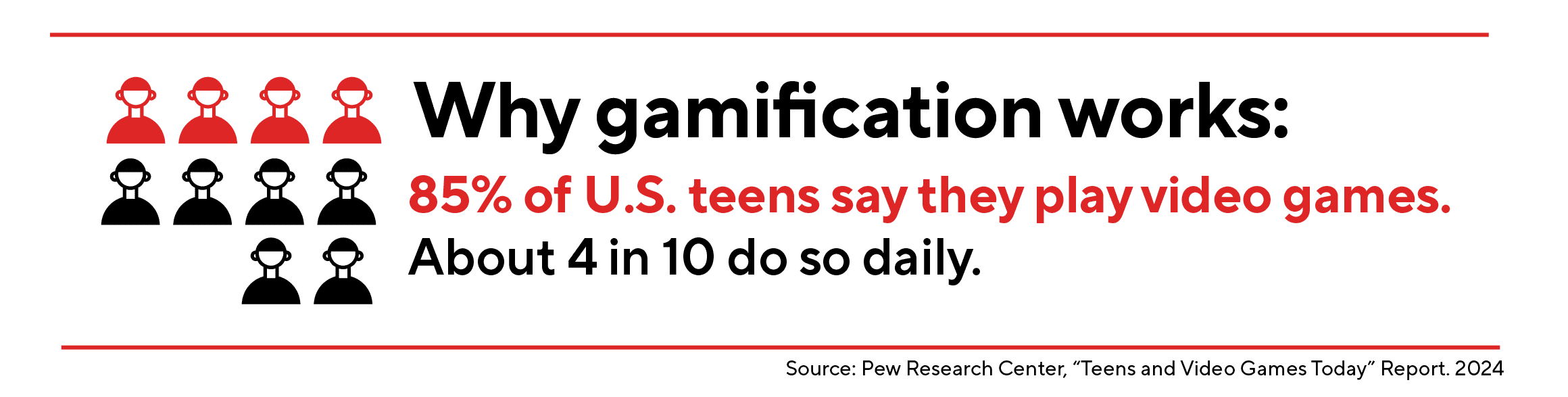
Imagine a world where students are racking up XP (experience points) not just in Fortnite® but in math, science and teamwork. By bringing video gaming into the mix, schools are helping kids build critical academic and life skills while preparing them for the tech-driven career jungle of the future.
It’s learning but with epic loot drops. What student wouldn’t want that?
The best news? Your school doesn’t need a massive budget or an unlimited amount of space to make this happen. Whether you're a rural school district or a bustling inner-city school, gamification can be scaled to fit your resources.
Let’s play this game for a couple of levels and see where it takes us.
What Is Education Gamification?
Education gamification is all about using elements of games — such as points and challenges — to engage students in their learning. Think tools like Minecraft Education®, where students can explore historical events or build real-life applications of geometry.
Gamification doesn’t stop with software. Teachers can create leaderboards for classroom achievements and reward collaborative problem-solving efforts with points or small prizes.
By gamifying learning, the focus shifts from memorization to interactive, purpose-driven exploration.