How non-standard suppliers are hurting your bottom line



Three tough procurement challenges

Irregular pricing

Compliance gaps

Lack of spend visibility
The risks of non-standard suppliers
At first glance, allowing your front-end managers to use popular online retailers might seem like the perfect solution. These platforms typically provide access to a wide range of products, quick shipping options and seemingly competitive pricing.
However, beneath the surface lie significant risks that may ultimately hurt your organization.
Pricing Volatility
One of the biggest challenges with non-standard suppliers is their reliance on dynamic pricing models. This means prices fluctuate based on demand, creating unpredictability that can derail your budget.
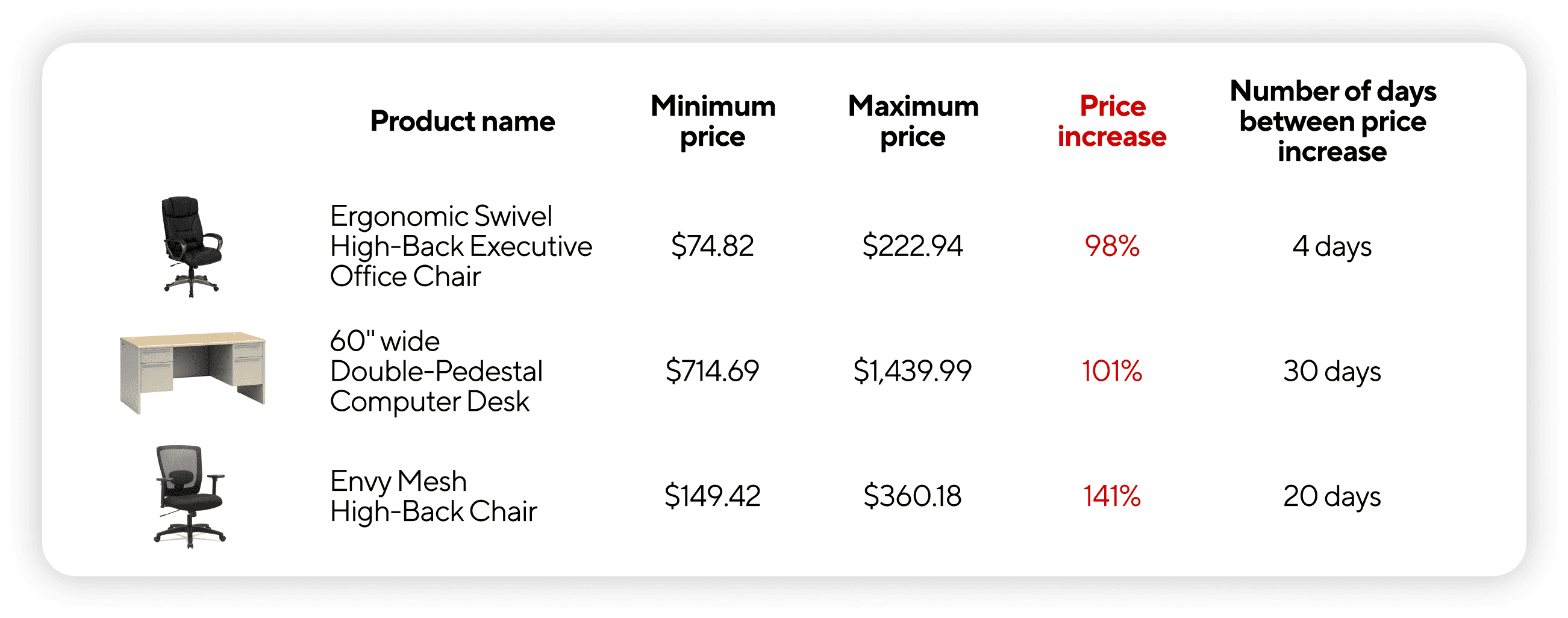
The odds are strong that your front-end users are not tracking these dynamic prices; most of them are probably not even aware of such practices. So, to illustrate, here are some recent, real-world price differences from a popular online (and non-standard) retailer.
Real-world pricing variations you typically see with non-standard suppliers and dynamic pricing2
Office furniture
Breakroom supplies
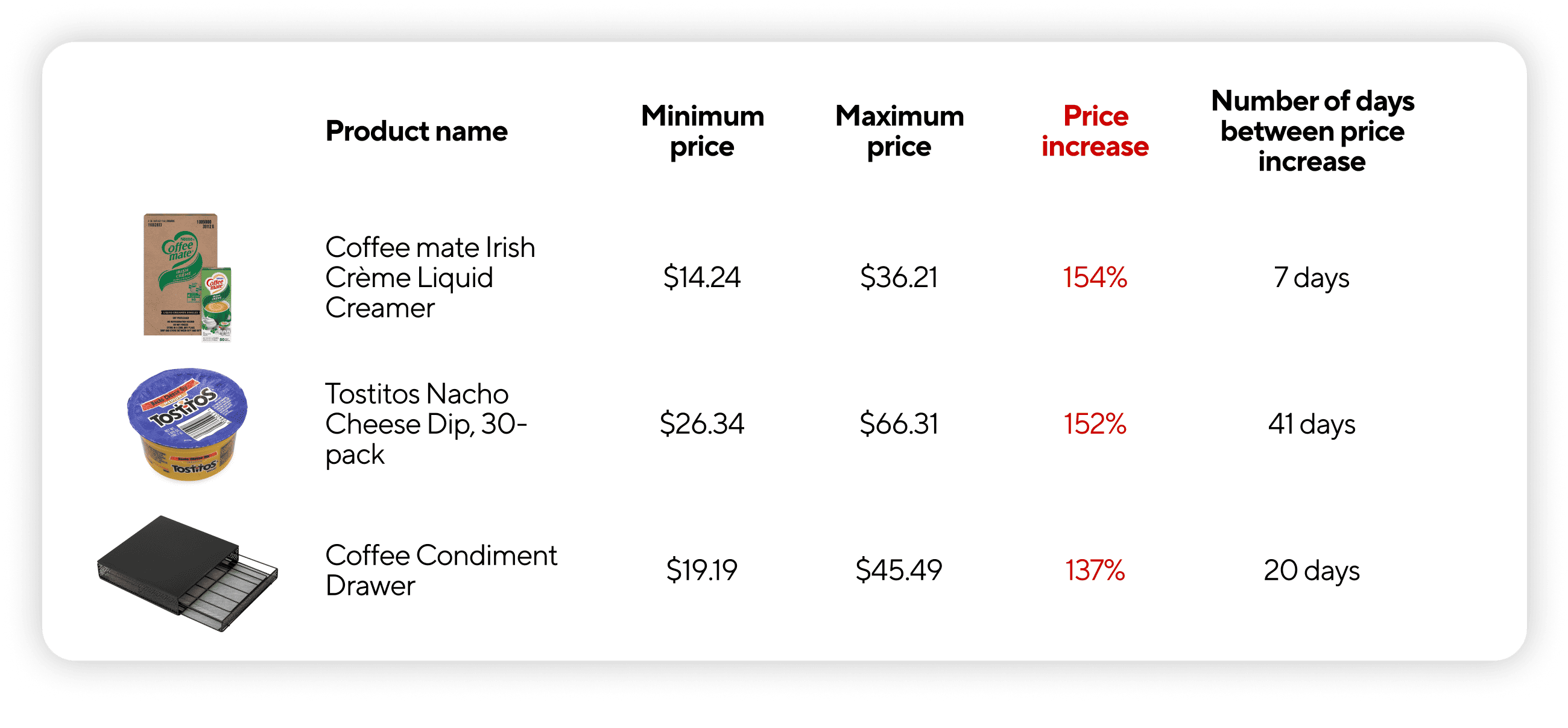
It’s important to note that we didn’t cherry-pick these few examples just to make our point. There are thousands of products with price fluctuations like these from nonstandard suppliers. The risk of paying prices that could potentially be marked up 150%-200% should be all the justification a smart procurement director needs to limit purchases from non-standard suppliers.
The better solution? Work with suppliers who offer stable, negotiated pricing. This not only reduces financial risks but also makes forecasting and budgeting more reliable.